The Middle Kingdom
After a century of division, a king from Thebes put Egypt back together. The Middle Kingdom (c. 2055–1650 BCE) is the age Egyptians themselves later looked back on as their classical age — of great literature, careful government, and expansion into Nubia. It began with Mentuhotep II and ended with foreign kings in the Delta.
In short
The Middle Kingdom (c. 2055–1650 BCE) began when Mentuhotep II of Thebes reunified Egypt after the First Intermediate Period. Its 12th Dynasty kings ruled from Itjtawy, reclaimed farmland in the Faiyum, built fortresses in Nubia, and produced the literature Egyptians later called their classics — including the Story of Sinuhe.
Reunification
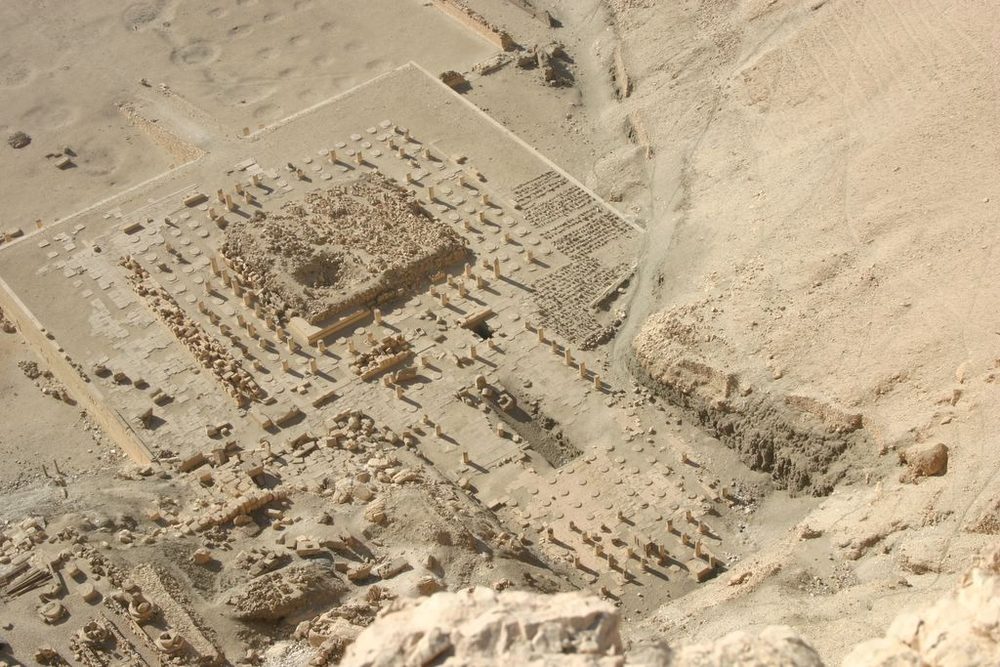
The Old Kingdom collapsed around 2181 BCE, and for more than a century Egypt was divided. Rival dynasties ruled from Herakleopolis in the north and Thebes in the south, while local governors ran their own provinces. Low Nile floods made the hardship worse. Then, around 2055 BCE, the Theban king Mentuhotep II defeated the northern rulers and reunified the country. He marked the victory with a new kind of royal tomb: a terraced mortuary temple cut into the cliffs at Deir el-Bahari, on the west bank at Thebes — the same cliffs where Queen Hatshepsut would build her own temple 500 years later.
Mentuhotep II ruled for about 50 years, reunited the administration, and restored trade with the lands to the south and east. The capital moved with the kings: Thebes was the home of the reunifiers, but the 12th Dynasty, founded by Amenemhat I around 1985 BCE, built a new royal residence called Itjtawy, near the Faiyum oasis and close to Memphis — a sign that the kings wanted to govern from the centre of the country, not from the far south.
A classical age
The Middle Kingdom is remembered above all for its writing. The Egyptians of later ages treated Middle Kingdom literature as the standard of good Egyptian, the way later Europeans treated the Latin of Cicero. The best-known work is the Story of Sinuhe, the tale of a courtier who flees Egypt after a king's death, lives for years in the Levant, and returns home in old age to be buried in Egypt. It is a story about exile and belonging, and it was copied by schoolboys for centuries. Other works — the Instructions of Ptahhotep's tradition, the Tale of the Shipwrecked Sailor, the laments and dialogues — show a literature that could be funny, bleak, and thoughtful by turns.
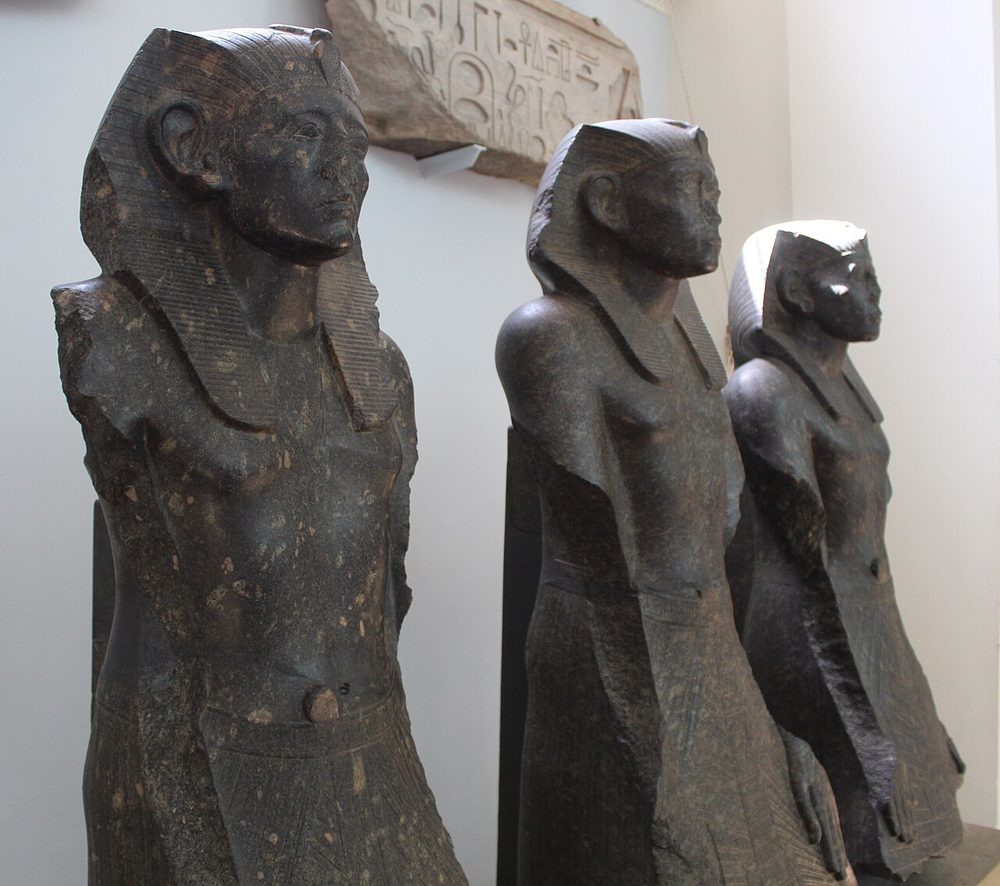
Art changed too. Middle Kingdom statues of kings show lined, watchful faces — older, wearier men than the smooth, godlike figures of the Old Kingdom. The kings were still gods, but they were shown as rulers who carried the weight of the job. Tomb paintings in the provinces, at Beni Hasan and elsewhere, give us some of the clearest pictures of daily life in ancient Egypt: farming, hunting, dancing, wrestling, and craftsmen at work.
Faiyum and Nubia
The 12th Dynasty kings were great builders of a practical kind. In the Faiyum, a fertile depression west of the Nile, they reclaimed large areas of land from the lake, dug canals, and built a new town — a project that fed more people and filled the royal treasury. To the south, they built a chain of great mud-brick fortresses in Lower Nubia, as far as the Second Cataract, to control the gold mines and the trade routes from Africa. The fortress at Buhen was one of the largest military buildings of the ancient world. Senusret III, who ruled around 1878–1839 BCE, pushed the border further south than any king before him and was later worshipped as a god in Nubia.
The Middle Kingdom also kept careful records. Its officials measured the Nile flood at the nilometers and stored grain against bad years. Trade reached Punt on the African coast, the Sinai mines, and the Levant. It was a well-run state — and that is why it is remembered as a golden age.
The end: the Hyksos
The Middle Kingdom ended in the 13th Dynasty, when the central government weakened and power slipped back to the provinces. From about 1650 BCE, rulers of West Asian origin known as the Hyksos — the name comes from the Egyptian for "rulers of foreign lands" — took control of the Nile Delta, ruling from their capital Avaris. They brought new technology with them, including the horse-drawn chariot and the composite bow, which the Egyptians would later adopt and use to build an empire. Thebes, in the south, held out under its own kings, and it was from Thebes that the fightback would come — the story of the New Kingdom.
Sources: Wikipedia — Middle Kingdom of Egypt, Britannica — The Middle Kingdom, Metropolitan Museum of Art — The Middle Kingdom Checked 27 November 2026.