The Rosetta Stone & Modern Archaeology
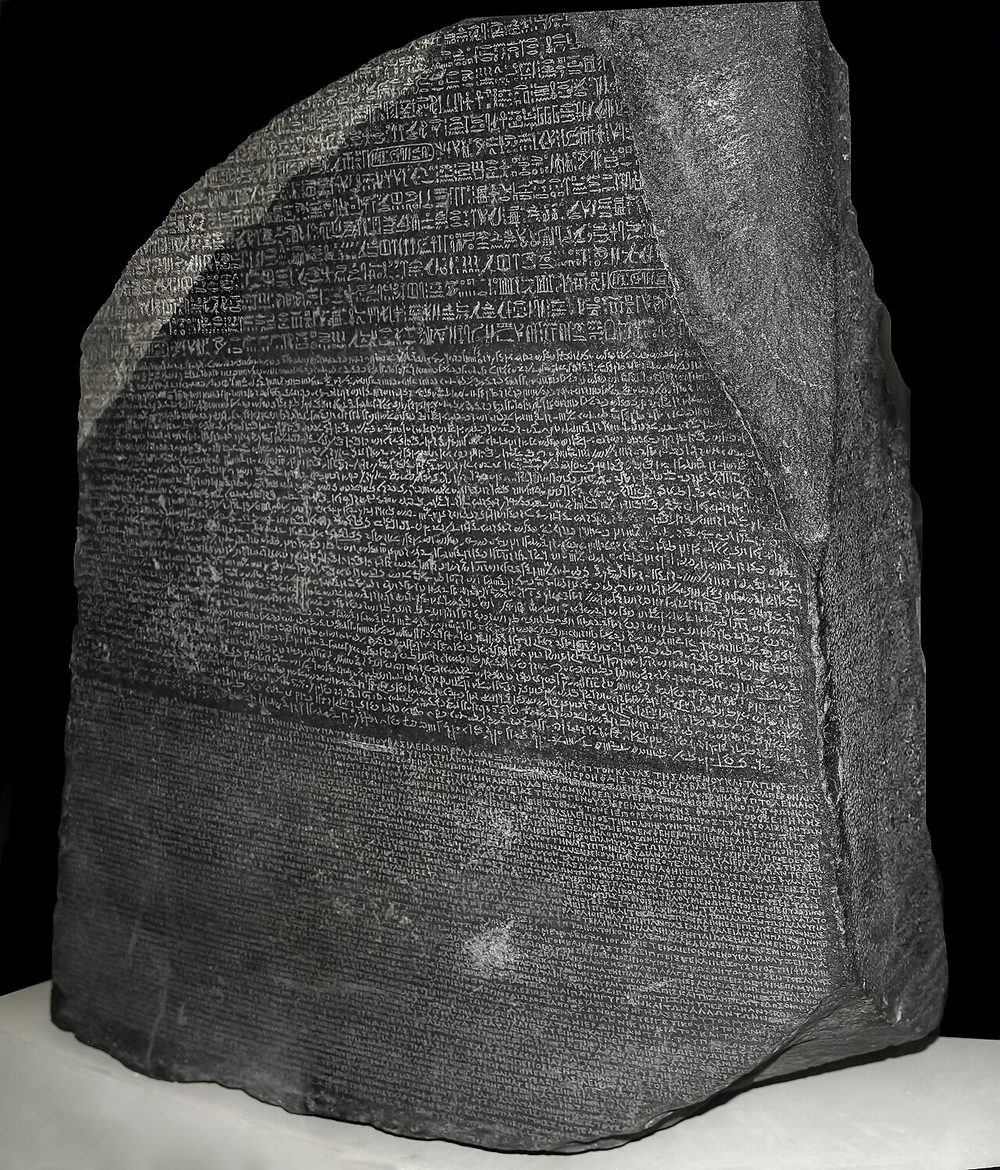
For 1,400 years, nobody could read Egyptian hieroglyphs. The temples were covered in writing that no one understood. Then, in July 1799, French soldiers rebuilding a fort in the Nile Delta dug up a broken slab of dark stone — and on it, the same decree was written three times. That slab, the Rosetta Stone, unlocked the whole civilisation.
In short
The Rosetta Stone is a fragment of a decree of Ptolemy V from 196 BCE, written in hieroglyphs, demotic, and Greek. Found near Rosetta in July 1799, it let scholars compare the known Greek text with the unknown scripts. Jean-François Champollion announced the decipherment of hieroglyphs on 27 September 1822 — and Egyptology, the study of ancient Egypt, was born.
A stone in a fort wall
The Rosetta Stone is a fragment of a larger slab, made of dark granodiorite, about 1.1 metres tall and 75 centimetres wide. It was carved in 196 BCE, during the reign of Ptolemy V, and set up in a temple: the text is a decree by Egyptian priests honouring the young king. The same decree appears in three scripts — formal hieroglyphs at the top (14 lines survive), demotic, the everyday Egyptian script, in the middle (32 lines), and ancient Greek at the bottom (53 lines).
At some point the slab was broken, and by about 1470 the fragment had been built into the wall of a fort near the town of Rashid — Rosetta, in the Nile Delta. It stayed there until July 1799, when French soldiers under Napoleon, rebuilding the dilapidated Fort Julien, pulled it out of the wall. The officer in charge, Pierre-François Bouchard, recognised at once that it might be important: scholars could read Greek, so if the three texts said the same thing, the stone could be the key to hieroglyphs. Copies of the inscriptions were made and sent to scholars across Europe.
In 1801, the French surrendered in Egypt, and under the terms of the surrender the stone went to Britain. It arrived in London in 1802 and has been on display in the British Museum ever since — its most visited object. Egypt has repeatedly asked for its return; the British Museum says it will stay.
The race to decode it
Decoding the stone took 23 years. The first breakthrough came from Thomas Young, an English polymath, who worked out that the six identical cartouches — oval rings enclosing signs — in the hieroglyphic text spelled the name "Ptolemy", matching the name in the Greek. He also showed that some hieroglyphs stood for sounds, not just ideas.
The decisive work was done by Jean-François Champollion, a French scholar who had studied ancient languages since his teens and knew Coptic, the last form of the Egyptian language, written in Greek letters. Champollion realised that hieroglyphs were mostly phonetic — they spelled out sounds, including the sounds of Coptic words — and that the same signs could stand for sounds, words, and ideas. On 14 September 1822, he burst into his brother's office in Paris crying "Je tiens mon affaire!" — "I've got it!" — and fainted. On 27 September 1822, he announced his decipherment to the Académie des Inscriptions et Belles-Lettres in Paris. For the first time in fourteen centuries, Egyptian hieroglyphs could be read.
What the decipherment unlocked
Once hieroglyphs could be read, everything changed. Temple walls, tomb paintings, and papyri became documents instead of decoration. Scholars could read royal lists and work out the chronology of the kings; they could read medical texts, stories, letters, and tax records, and hear Egyptians speaking in their own words for the first time in millennia. Egyptology became a science, and the nineteenth century saw the great excavations: Auguste Mariette's discovery of the Serapeum at Saqqara, Flinders Petrie's scientific excavations, and, in 1922, Howard Carter's discovery of Tutankhamun's tomb.
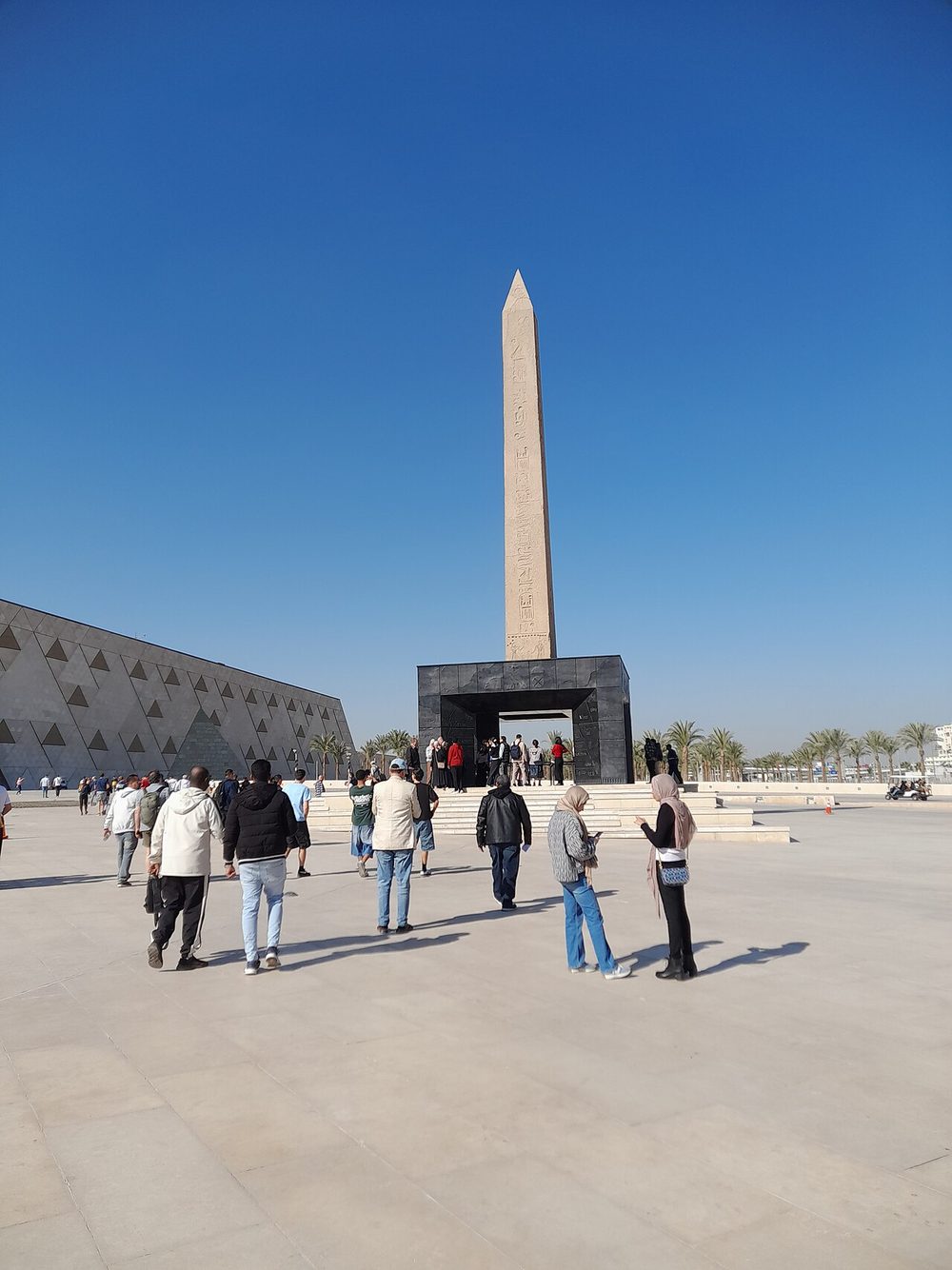
The work continues today. Archaeologists use satellite images, ground-penetrating radar, and DNA analysis alongside the trowel. In the 1960s, UNESCO's rescue of Abu Simbel showed the world that saving Egypt's monuments was a shared human task. The Grand Egyptian Museum, near Giza, which opened fully in November 2025, displays the treasures of Tutankhamun together for the first time. And the questions the Rosetta Stone first raised are still open: new tombs are found every year, and each one adds a line to a story that began 5,000 years ago.
Visiting Egypt today
Modern visitors can see the story in the places where it happened: the pyramids of Giza and Saqqara, the temples of Karnak and Luxor, the Valley of the Kings, the temples of Abu Simbel, and the museums of Cairo and Giza. The Rosetta Stone itself is in London — but the civilisation it unlocked is still there, in the ground and on the walls, along the Nile.
Sources: Smithsonian Magazine — What Is the Rosetta Stone?, Britannica — Rosetta Stone Decoded by Champollion, JSTOR Daily — Champollion Deciphers the Rosetta Stone Checked 27 November 2026.