The Pyramids & the Old Kingdom
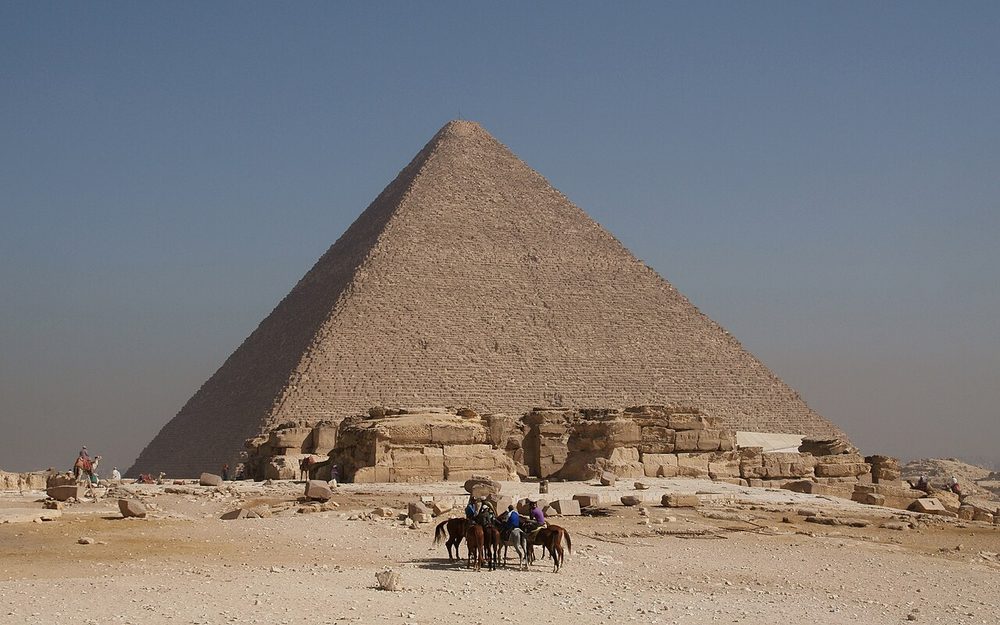
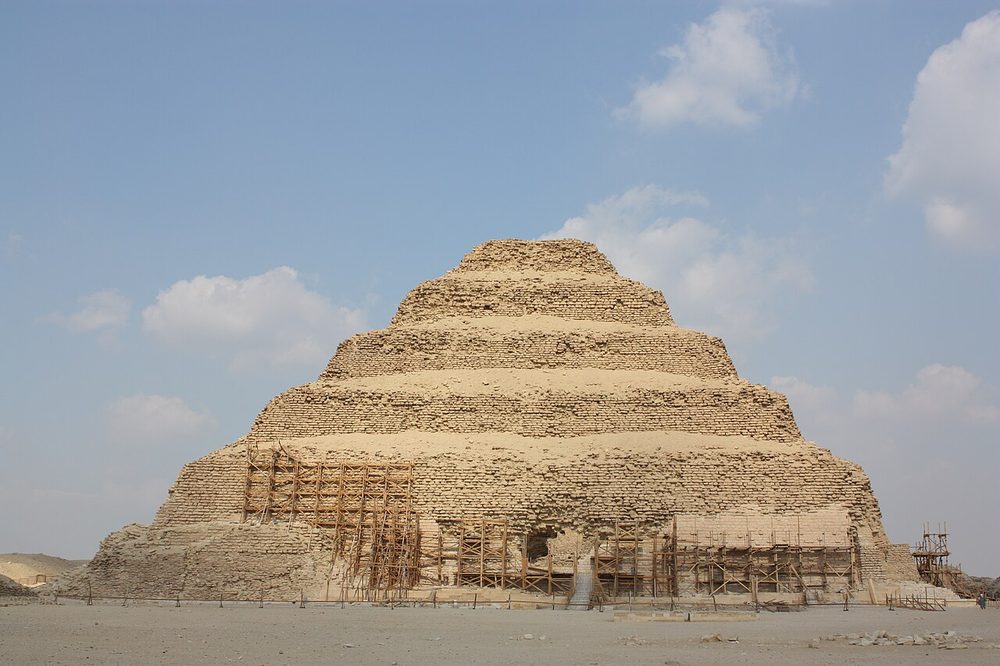
The Old Kingdom (c. 2686–2181 BCE) was the age of the pyramids. In about two centuries, Egyptian kings went from building the first stone pyramid — a stepped pile of mastabas at Saqqara — to the Great Pyramid of Giza, the tallest human-made structure on Earth for more than 3,700 years. It was the first great building age in history.
In short
The Old Kingdom's kings built the pyramids as royal tombs, starting with Djoser's Step Pyramid at Saqqara (c. 2670 BCE) and peaking with Khufu's Great Pyramid at Giza (c. 2580–2560 BCE), originally 146.6 metres tall. The pyramids were built by skilled, paid Egyptian workers — not slaves — using copper tools, sledges, and ramps.
The first pyramid
The pyramid age began with a single idea. King Djoser, the first king of the Third Dynasty, wanted a tomb unlike any before it. His architect, the vizier Imhotep, started with the usual royal tomb — a mastaba, a flat-topped rectangular mound of mud brick — and then did something no one had done before: he built it in stone, and he stacked six mastabas on top of each other, each smaller than the last. The result, at Saqqara, was the Step Pyramid: about 60 metres high, the first large-scale stone building in history, and the first pyramid ever built. Imhotep was so admired that later Egyptians worshipped him as a god of medicine and building — a rare honour for a man who was not a king.
The Step Pyramid stood at the centre of a great walled complex of courtyards, temples, and shrines, covering about 15 hectares. Underneath it ran a maze of tunnels and chambers, with a burial chamber at the bottom of a shaft 28 metres deep. The whole complex was built to let the king celebrate his jubilee festival and live on as a god after death.
The smooth pyramid
Djoser's successors improved the design. King Sneferu, founder of the Fourth Dynasty, built three pyramids of his own and worked out how to make the sides smooth instead of stepped — first at Meidum, then the Bent Pyramid at Dahshur, and finally the Red Pyramid, the first true smooth-sided pyramid. His son Khufu then took the finished idea to a new site, the rocky plateau of Giza, and built the largest pyramid ever made.
The Great Pyramid
The Great Pyramid of Giza was the tomb of Pharaoh Khufu (called Cheops by the Greeks), built around 2580–2560 BCE over roughly 20 years. When it was finished it stood 146.6 metres (481 feet) tall — about as tall as a 40-storey building — with a base 230 metres on each side. It was made of about 2.3 million blocks of stone, most of them limestone, with granite for the burial chamber, weighing about 6 million tonnes in total. It was the tallest human-made structure in the world for more than 3,700 years, until the spire of Lincoln Cathedral passed it around 1300 CE, and it is the oldest of the Seven Wonders of the Ancient World — and the only one that still stands largely intact.
The pyramid was originally covered in smooth white limestone casing stones that would have gleamed in the sun; most were stripped away in later centuries to build Cairo. Inside are three chambers — the King's Chamber, the Queen's Chamber, and an unfinished chamber cut into the rock below — connected by narrow passages and the steep Grand Gallery. Khufu's granite sarcophagus still sits in the King's Chamber. In 2023, scientists announced the discovery of a hidden corridor above the main entrance, a reminder that the pyramid still holds secrets.
Who built the pyramids?
The old story — that the pyramids were built by slaves — is wrong. The workers were Egyptian farmers and skilled craftsmen, organised into crews with names like "the Friends of Khufu", working in rotating shifts, mostly during the flood season when farming was impossible. They were paid in food, beer, and clothing, and they lived in a purpose-built workers' town at Giza, where archaeologists have found their houses, bakeries, and cemeteries. The workforce was probably 20,000 to 30,000 people at a time. They cut stone with copper chisels and saws, dragged blocks on wooden sledges over wet sand — experiments have shown wet sand cuts the friction sharply — and raised them on ramps. The exact layout of the ramps is still debated, but the work itself was done by free, organised Egyptians, not by slaves.
The Old Kingdom and its end
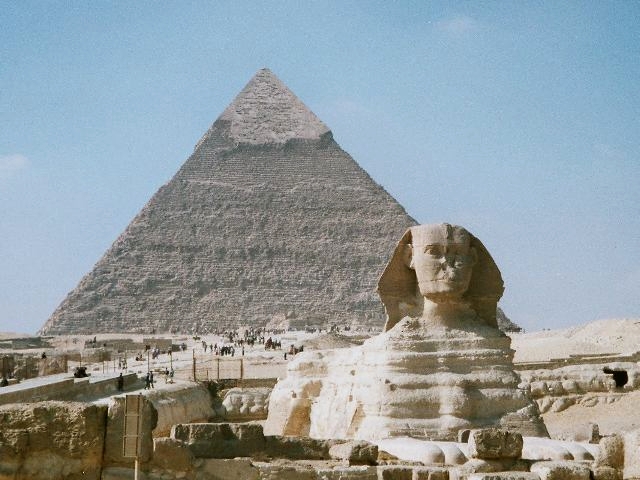
The Old Kingdom was Egypt's first golden age: a strong central government, a rich farming economy, and a confident art and religion. After Khufu, his son Khafre built the second pyramid at Giza and the Great Sphinx, and Menkaure built the third. The Fifth and Sixth Dynasties built smaller pyramids and great sun temples, and filled their tombs with the first religious writings — the Pyramid Texts, spells carved on the walls to guide the king into the afterlife.
The Old Kingdom ended around 2181 BCE. The causes are still argued over: low Nile floods and drought, the growing power of provincial governors, and the very long reign of Pepi II, which may have lasted 90 years or more. Central authority broke down, and Egypt split into rival regions in the First Intermediate Period. The pyramids stayed where they were — too big to move, too famous to forget — and every later Egyptian age measured itself against them.
Sources: Wikipedia — Great Pyramid of Giza, Live Science — Step Pyramid of Djoser, World History Encyclopedia — Giza Checked 27 November 2026.