Roman & Islamic Egypt
Egypt's pharaohs were gone, but Egypt's story was not over. For 670 years it was a province of Rome — the empire's breadbasket and an early home of Christianity. Then, in 641 CE, Arab armies brought Islam, and Egypt became an Arabic-speaking, mostly Muslim land. Cairo, founded in 969 CE, became one of the great cities of the Islamic world.
In short
Egypt was a Roman province from 30 BCE to 641 CE, prized as Rome's breadbasket and an early centre of Christianity. In 639–641 CE, Arab forces under Amr ibn al-As conquered it for the Rashidun Caliphate and founded Fustat; the Fatimids founded Cairo in 969 CE, and Egypt stayed under Muslim rule — through Fatimids, Ayyubids, Mamluks, and Ottomans — for the next 1,300 years.
Roman Egypt: the breadbasket
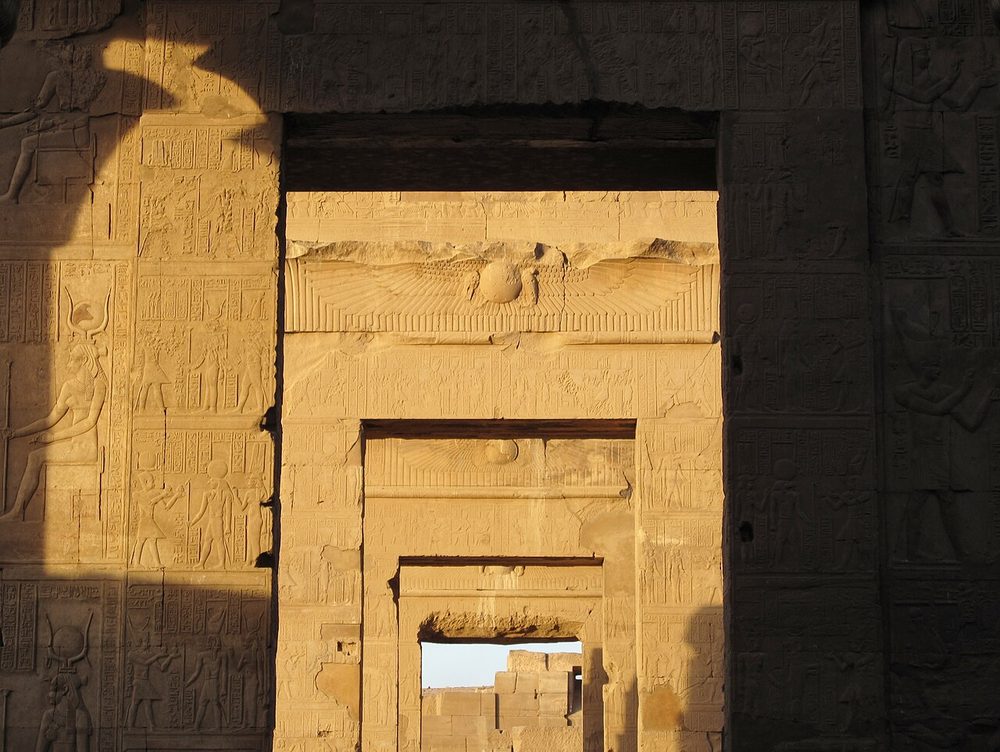
When Octavian took Egypt in 30 BCE, he made it a Roman province — but a special one. Egypt was too rich and too important to be left to a senator, so it was ruled directly by the emperor's own prefect, and senators were forbidden to enter it without permission. The reason was grain. Egypt's harvests fed Rome: every year, fleets of grain ships sailed from Alexandria to the capital, and the emperor's power depended on them. Alexandria remained a great city — its library, its scholars, and its mixed population of Greeks, Egyptians, and Jews made it one of the most learned cities in the empire.
Under Rome, Egypt changed slowly. The temples kept their priests, the old gods were worshipped alongside Roman ones, and the Egyptian language continued in the countryside, gradually written in Greek letters — the language we call Coptic. The great building age was over, but Egypt produced something new: Christianity. By tradition, Saint Mark brought the faith to Alexandria in the first century CE, and by the third century Egypt was one of the most Christian lands in the world. Egyptian monks invented monastic life in the desert, and the Coptic Church — still the church of millions of Egyptians today — traces its history to this age.
The end of Roman Egypt was a slow decline. In 451 CE, the Council of Chalcedon split the Christian Church, and the Egyptian Church broke with Constantinople over theology. Egyptians felt increasingly alienated from Byzantine rule, and when the Persians invaded in 619 CE, then the Arabs in 639 CE, there was little will to fight for the empire.
The Arab conquest
In 639 CE, an Arab army under Amr ibn al-As, sent by the Rashidun Caliphate, entered Egypt. It took the Byzantine fortress of Babylon, near Memphis, in 641, and Alexandria surrendered by treaty, with the last Byzantine troops leaving in 642. The conquest was quick, and it changed Egypt more deeply than any conquest before it. Over the following centuries, Egypt gradually became an Arabic-speaking and mostly Muslim country — though the change took centuries, not years, and Christians remained a large part of the population.
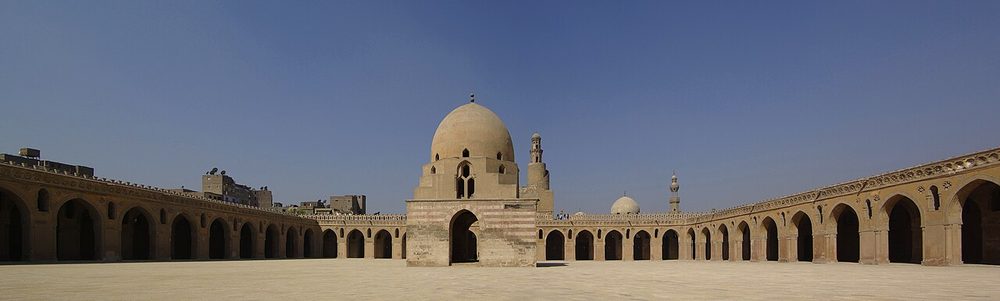
Amr founded a new capital, Fustat, on the site of his army camp beside the fortress of Babylon — the seed of the later city of Cairo. Fustat grew into a great trading city, and the Mosque of Amr ibn al-As, built there in 641–642, is the oldest mosque in Africa. A later mosque, that of Ibn Tulun (built 876–879 CE), still stands in Cairo today and is one of the oldest mosques in the world in its original form.
Cairo and the Islamic centuries
In 969 CE, the Fatimids, a dynasty from North Africa, conquered Egypt and founded a new city, al-Qahira — "the Victorious", which is Cairo — beside Fustat. They built the mosque-university of al-Azhar in 970–972, which is still one of the great centres of Islamic learning. Cairo became one of the largest and richest cities in the world, a crossroads of trade between Africa, Asia, and Europe.
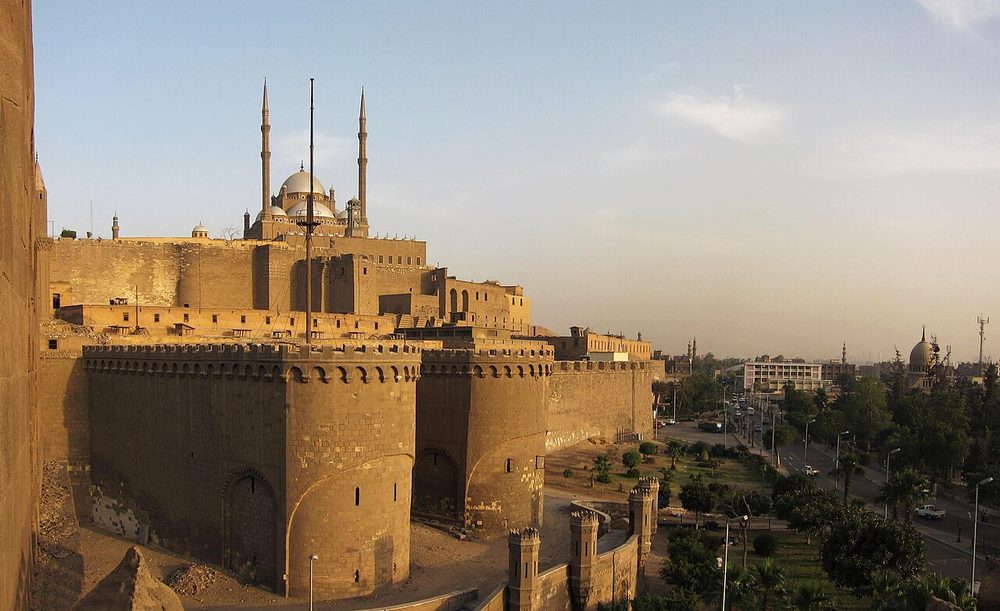
The centuries that followed brought new rulers: the Ayyubids under Saladin, who built the Citadel of Cairo in the twelfth century; the Mamluks, former slave-soldiers who became sultans and ruled from 1250 to 1517, building the great mosques and madrasas that still define old Cairo; and then, in 1517, the Ottoman Empire, which made Egypt a province ruled from Istanbul. Through all of it, Egypt stayed what it had been since the pharaohs: a land of the Nile, fed by the river, ruled from a great city at the head of the Delta — only now the city was Cairo, and the language was Arabic.
What survived
The pharaohs' Egypt never vanished entirely. The Coptic language kept the ancient Egyptian tongue alive into modern times. The old calendar, with its 365 days, survived in farming. And the monuments — the pyramids, the temples, the tombs — stayed where they were, visited by travellers and wondered at for a thousand years before modern archaeology began. When Napoleon's army reached Egypt in 1798, and when the Rosetta Stone was found the next year, Europe rediscovered the Egypt of the pharaohs — and the modern story of Egyptian archaeology began.
Sources: Wikipedia — History of Egypt, Wikipedia — Muslim Conquest of Egypt, Britannica — Egypt Checked 27 November 2026.