The Unification of Egypt & Narmer
About 5,000 years ago, the Nile Valley was two separate lands — Upper Egypt in the south and Lower Egypt in the north. Around 3100 BCE, a king named Narmer brought them together under one crown, founded the First Dynasty, and created the first unified state in recorded history. It is the moment Egyptian history begins.
In short
Around 3100 BCE, King Narmer united Upper and Lower Egypt into a single kingdom, most likely the same king later remembered as Menes. He founded the First Dynasty and a new capital, Memphis, at the junction of the two lands — and the unified state he created lasted, in one form or another, for about 3,000 years.
Two lands, one river
Before unification, Egypt was not one country. The Nile Valley was divided into two regions that were almost opposites. Upper Egypt was the long, narrow valley in the south, where the river runs between cliffs of rock. Lower Egypt was the wide, flat Delta in the north, where the Nile fans out into many branches before reaching the Mediterranean Sea. Each region had its own rulers, its own gods, and its own crown — the tall White Crown of Upper Egypt and the flat Red Crown of Lower Egypt. The people of both lands farmed the same river, traded with each other, and shared a culture, but they were ruled separately.
The two lands grew out of farming villages that had appeared along the Nile over thousands of years. By about 3500 BCE, towns such as Hierakonpolis in the south and Buto in the north had grown rich and powerful. Their rulers competed for trade, for farmland, and for control of the river itself. Unification was not a single event on a single day — it was the end of a long process of wars, alliances, and marriages between rival kings. Narmer is the king who finished it.
Who was Narmer?
Narmer ruled around 3100 BCE, at the end of the fourth millennium. Most Egyptologists believe he was the same person as Menes, the king named in later Egyptian king lists as the first pharaoh and the founder of the state. The ancient historian Manetho, writing in the third century BCE, called Menes the first king of Egypt. The name "Narmer" was the king's Horus name — the name he used as a living god-king — while "Menes" may have been his personal name, or a title meaning "he who endures". A few scholars argue instead that Menes was Narmer's successor, Hor-Aha, but the majority view is that Narmer and Menes were one man.
What is certain is that Narmer was the first king of the First Dynasty, and that later Egyptians saw him as the founder of their history. Two seal impressions found in 1985 and 1991 at Abydos, in the tombs of kings Den and Qa'a, list Narmer as the first king of the dynasty, followed by Hor-Aha. To the ancient Egyptians themselves, history began with Narmer — everything before him belonged to the world of myth.
The Narmer Palette
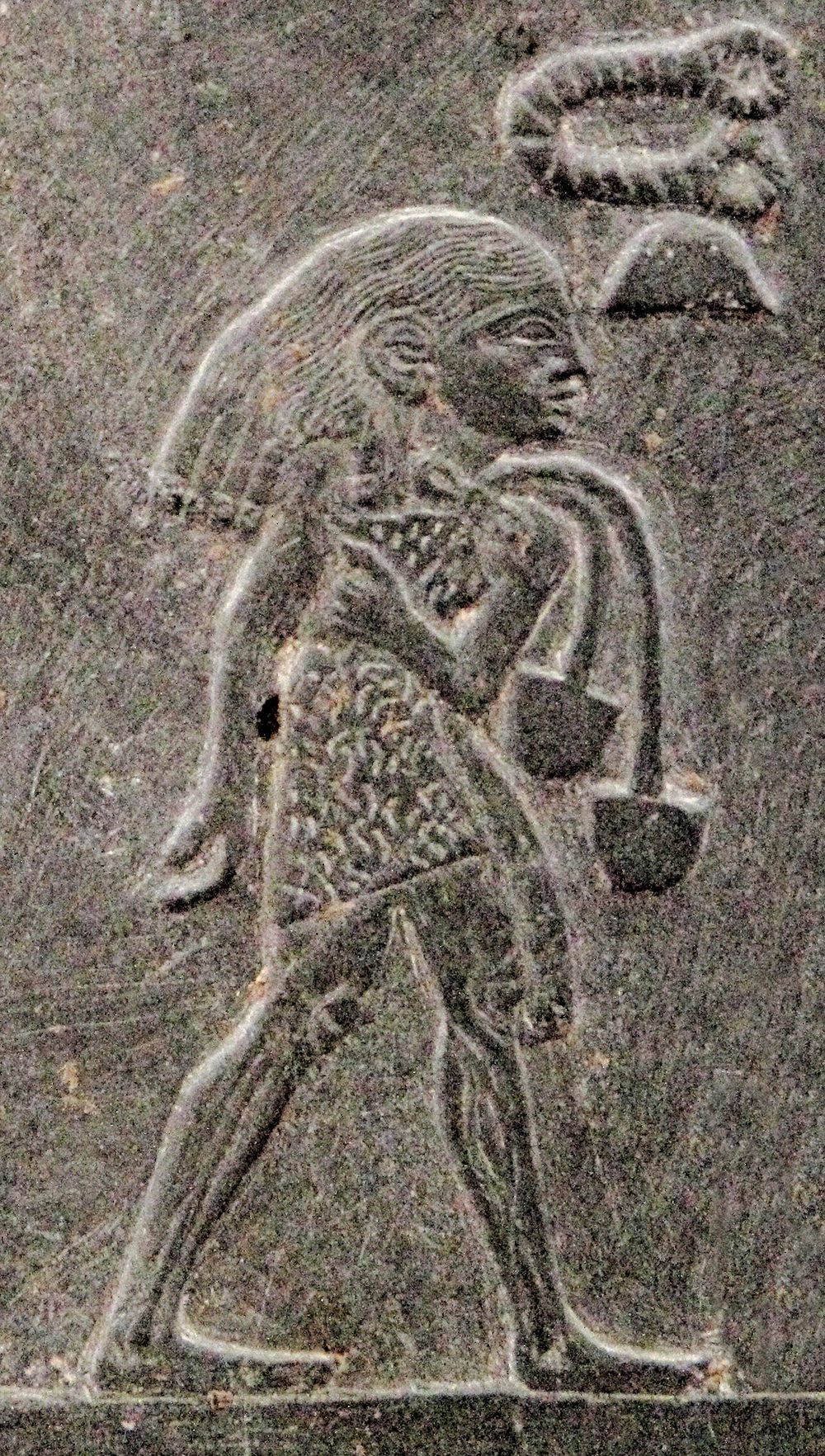
The most famous object from this moment is the Narmer Palette, a flat slab of siltstone about 64 centimetres tall, found at Hierakonpolis in 1897–98. On one side, Narmer wears the White Crown of Upper Egypt and strikes down an enemy. On the other side, he wears the Red Crown of Lower Egypt and walks in procession. Whether the palette records a real battle or is a symbolic statement of power is still debated, but its message is clear: one king now wore both crowns. The palette is now in the Egyptian Museum in Cairo, and it is one of the most reproduced objects of the ancient world.
The double crown became the symbol of the unified state. Later pharaohs wore the White and Red Crowns together as the Double Crown, and their title was "King of Upper and Lower Egypt". The two lands were never forgotten — the country was always "the Two Lands", and the king was always king of both.
Memphis, the new capital
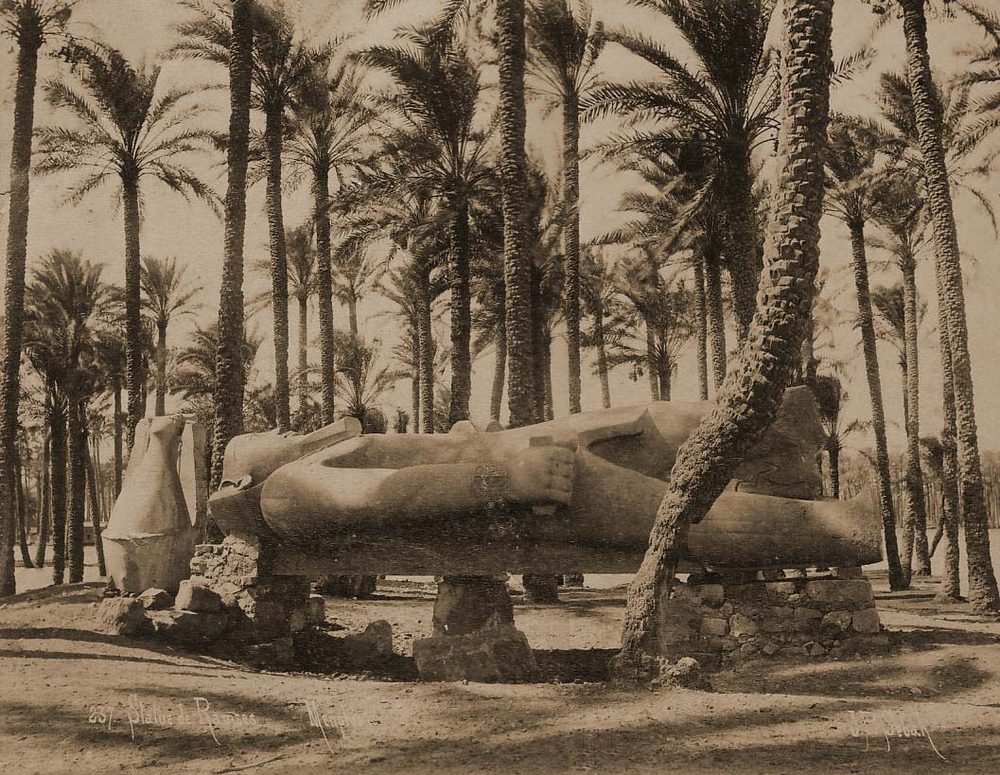
Tradition says Menes founded a new capital, Memphis, at the junction of Upper and Lower Egypt, near where the Nile Valley opens into the Delta — close to modern Cairo. The site was chosen with care: it sat exactly on the border between the two old kingdoms, so neither side could claim the capital as its own. Memphis stayed important for more than 3,000 years, as a royal residence, a port, and the home of the god Ptah. Its great cemetery, Saqqara, would later hold the first pyramid.
Unification also created something new in the world: a central government. One king, one court, one tax system, one army, and one written administration now governed the whole Nile Valley. Scribes recorded harvests, taxes, and royal orders in hieroglyphs. Officials measured the Nile flood and planned the farming year. That machinery — invented in the first dynasties — is what let Egypt build pyramids, temples, and an empire in the centuries that followed. The unification of Egypt produced, in the words of historians, the first unified bureaucratic state in world history.
What came next
The First Dynasty (c. 3100–2890 BCE) and the Second Dynasty that followed are called the Early Dynastic Period. The kings built tombs at Abydos and Saqqara, traded with the Levant, and pushed Egypt's borders into the Sinai and Nubia. The state they built was not always stable — the Second Dynasty ended in division — but the idea of one Egypt, ruled by one king wearing two crowns, never went away. Every later period of division in Egyptian history was measured against it, and every reunification was a return to Narmer's achievement. The Old Kingdom, the age of the pyramids, began only about four centuries later.
Sources: Wikipedia — Narmer, World History Encyclopedia — Narmer, Britannica — Ancient Egypt Checked 27 November 2026.