Tutankhamun & the Valley of the Kings
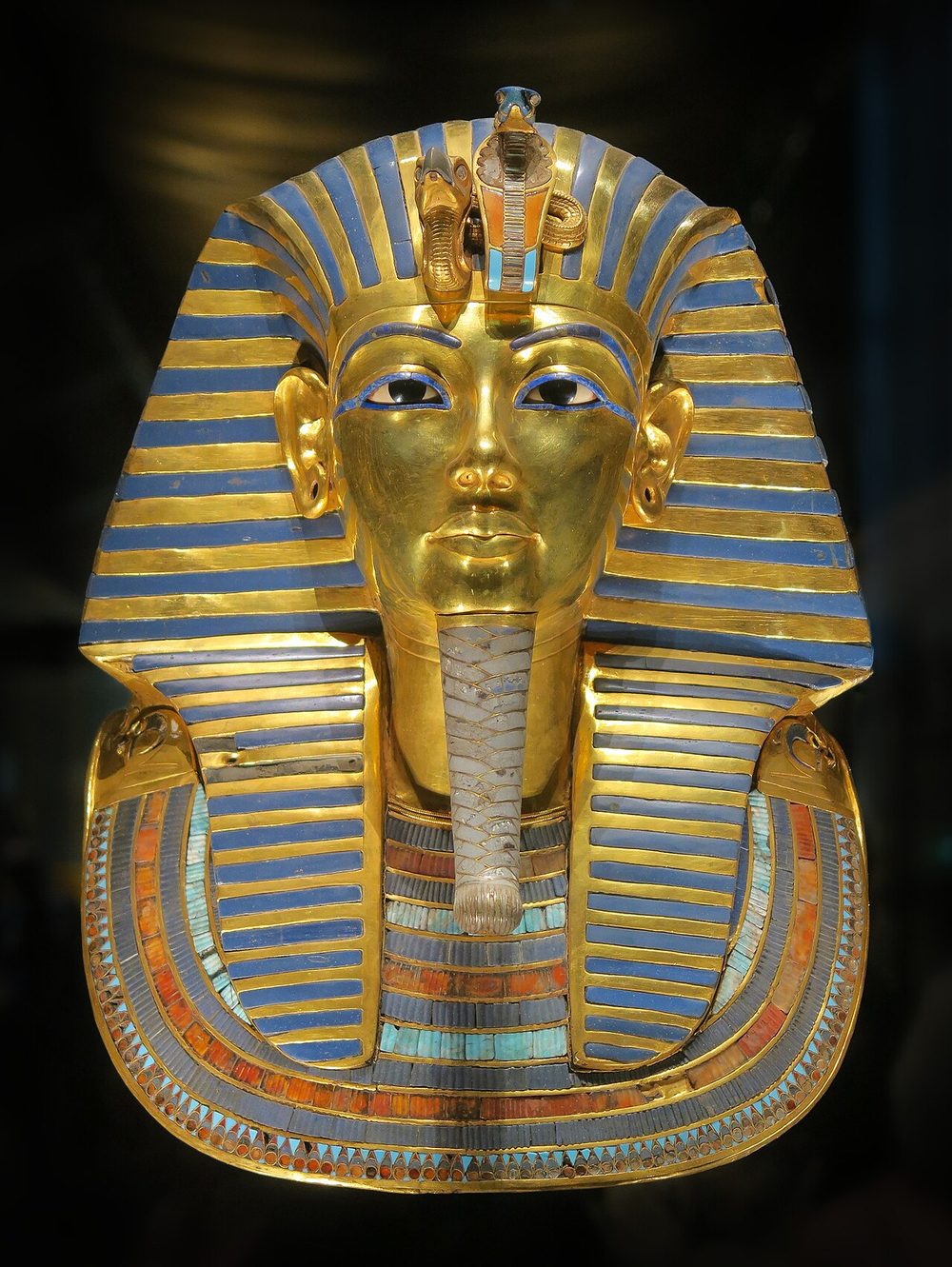
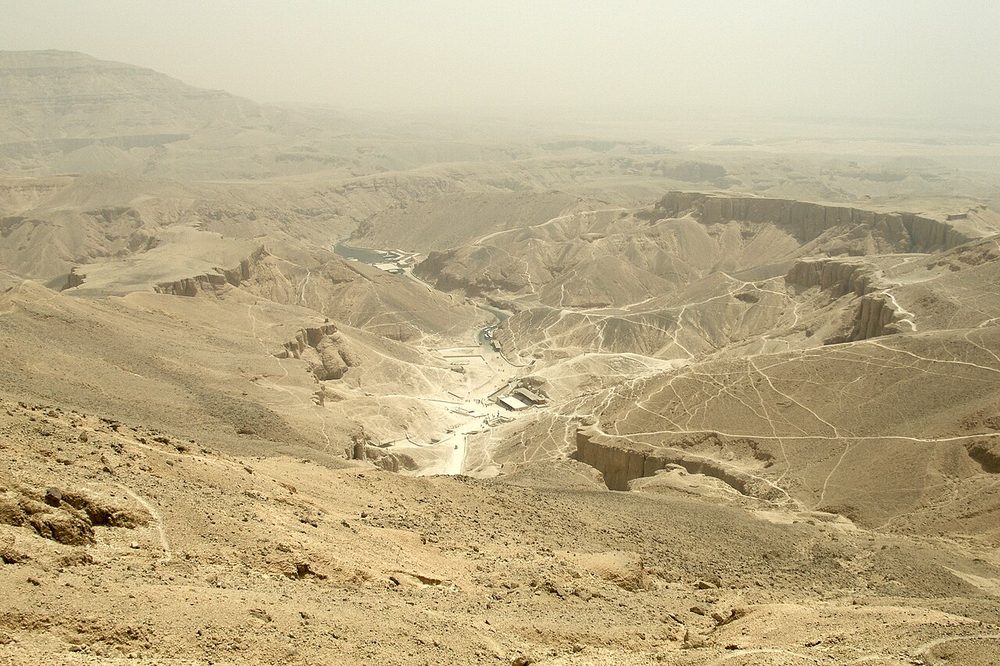
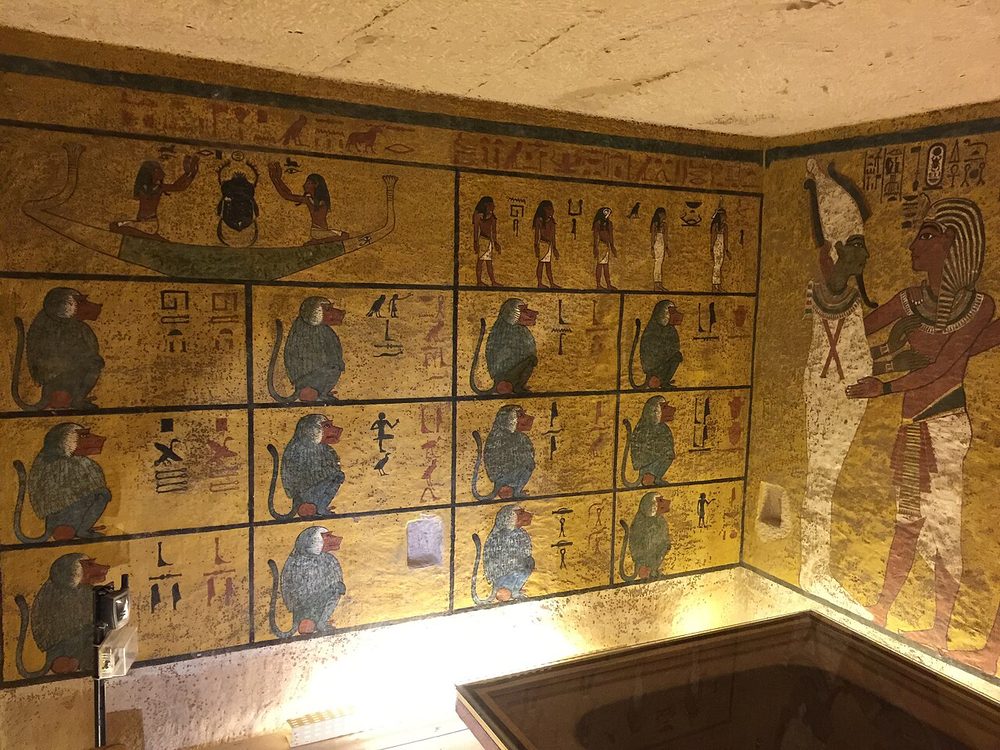
Tutankhamun was a boy king who ruled for only about ten years and died at nineteen — yet his name is the most famous of all the pharaohs. The reason is not his reign but his tomb: when Howard Carter found it in the Valley of the Kings in 1922, it was the only royal tomb ever discovered almost completely intact, holding more than 5,000 objects, including the golden mask.
In short
Tutankhamun reigned c. 1332–1323 BCE, became king aged about nine, and died aged about nineteen. His tomb, KV62 in the Valley of the Kings, was discovered by Howard Carter's team on 4 November 1922 and opened on 26 November 1922 — the only New Kingdom royal tomb found almost intact, with over 5,000 artefacts inside.
The Valley of the Kings
For about 500 years, the pharaohs of the New Kingdom were buried in a hidden desert valley on the west bank of the Nile at Thebes, across the river from modern Luxor. The Valley of the Kings holds 63 known tombs, cut deep into the rock and decorated with paintings of the king's journey through the afterlife. The move to hidden rock tombs was a deliberate change: the pyramids had proved too visible, and every one of them had been robbed. A hidden tomb in a remote valley, its entrance buried under rubble, seemed safer. It was not — almost every tomb in the valley was robbed in ancient times, some within years of the burial. Only one escaped: KV62, the tomb of Tutankhamun.
The valley's tombs belong to the greatest kings of Egypt: Thutmose III, Seti I, Ramesses II, and Ramesses VI, whose workmen built their huts directly over the entrance to Tutankhamun's tomb without knowing it was there — which is one reason it stayed hidden. The valley was used for royal burials from about 1539 BCE to about 1075 BCE, and it is now, with the temples of Luxor, one of the most visited archaeological sites in the world.
The boy king
Tutankhamun was probably the son of Akhenaten, the "heretic king" who had tried to replace Egypt's gods with the Aten, the sun disc. Tutankhamun came to the throne aged about nine, after Akhenaten's death and a short reign by a co-ruler, Smenkhkare. His original name was Tutankhaten — "living image of the Aten" — but early in his reign he changed it to Tutankhamun, "living image of Amun", as his advisers restored the old gods, reopened their temples, and moved the court back from Amarna to Memphis and Thebes.
He ruled for about ten years and died in 1323 BCE, aged about nineteen. The cause of his death is still debated — a broken leg that became infected, malaria, or a combination of illnesses are the leading explanations from modern scans of his mummy. He was buried in a small tomb that had probably been intended for someone else, in a hurry: spots of mould on the painted walls show the paint had not fully dried when the tomb was sealed.
The discovery
Howard Carter, a British archaeologist, had searched the Valley of the Kings for years, funded by the wealthy Lord Carnarvon. By 1922, most experts thought the valley had nothing left to find. Carter asked for one more season. On 4 November 1922, his workmen — Egyptian excavators clearing debris down to the bedrock — uncovered a step cut into the rock. Within days they had cleared a staircase leading to a sealed doorway stamped with the name of Tutankhamun.
On 26 November 1922, Carter made a small hole in the second sealed doorway and held a candle to it. Lord Carnarvon asked what he could see. Carter answered: "Yes, wonderful things." Behind the door lay the antechamber, filled with more than 600 objects: chariots, beds, chairs, chests, food, and wine. Beyond it were the annex, the treasury, and the burial chamber, where a stone sarcophagus held three nested coffins — the innermost of solid gold — and the mummy of the king wearing the gold funerary mask that has become the symbol of ancient Egypt. In total the tomb held over 5,000 objects. It took Carter's team ten years to empty and catalogue them all.
Why it matters
Tutankhamun's tomb tells us more about how a New Kingdom king was buried than any other discovery, because it is the only one that survived almost whole. Its objects show the art, the craftsmanship, the religion, and the daily life of the richest court of the ancient world: the gold, the inlaid furniture, the linen, the food left for the journey to the afterlife. The tomb also showed that even the most hidden burials could be found — and it made archaeology world news for the first time. The treasures are now displayed in the Grand Egyptian Museum near Giza, which opened fully in November 2025.
The tomb also carries a warning. Tutankhamun was a minor king whose reign changed little; his fame is an accident of preservation. The great kings — Thutmose III, Ramesses II — left far grander monuments, but their tombs were stripped bare by robbers. What survives is not always what mattered most.
Sources: Wikipedia — Tomb of Tutankhamun, Britannica — Tutankhamun, National Geographic — The Discovery of King Tut's Tomb Checked 27 November 2026.